
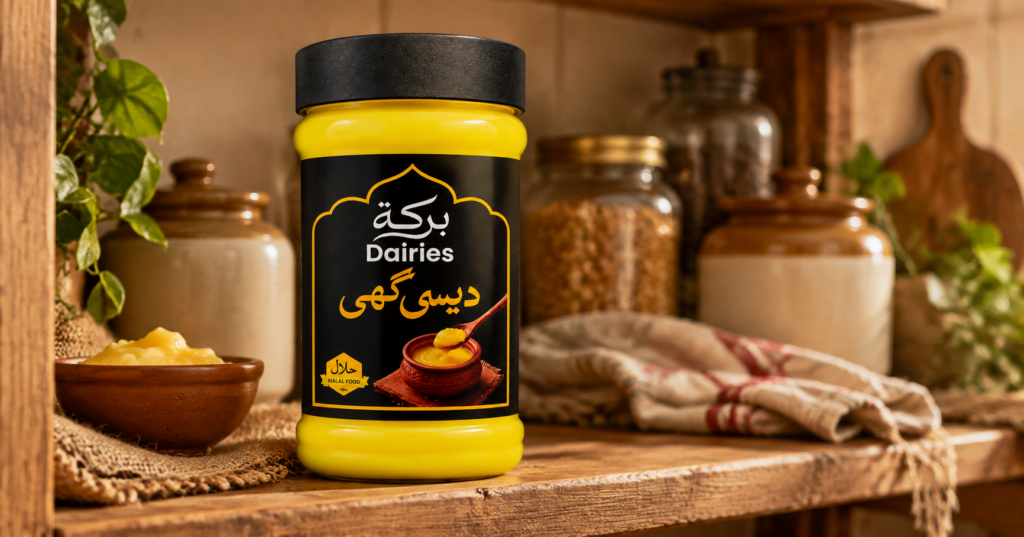
How to Store Desi Ghee
Store desi ghee in a clean, airtight glass or stainless-steel jar, kept away from the stove, sunlight, and steam, and always use a completely dry spoon. Do that consistently, and pure desi ghee will hold its aroma and golden colour for months at normal room temperature — no fridge required.
That’s the short version. But if you’ve ever opened a jar a few weeks in and noticed the smell had flattened, or found a thin layer of moisture sitting on top, the details matter more than the rule. Here’s what’s actually happening, and how to stop it.
What Actually Spoils Desi Ghee at Home
Ghee is almost pure milk fat, and fat breaks down through oxidation — a slow chemical reaction with air that dulls aroma and eventually turns the ghee rancid. Studies on ghee storage have found that peroxide levels, one of the main markers of this breakdown, rise faster when ghee sits in loosely sealed or light-permeable containers, and rise fastest at higher storage temperatures. In plain terms: heat, light, and air are the three things working against your jar every single day. Moisture is the fourth culprit, and it’s the one most Pakistani kitchens introduce by accident — usually through a spoon that was dipped in daal a minute earlier.
Choosing the Right Jar
Glass and food-grade stainless steel are the two containers worth using. Neither reacts with the fat, neither holds on to old smells, and both seal tightly if the lid is good. Thin plastic is the one to avoid for daily use — in a hot kitchen, it can absorb odours and isn’t built for years of repeated contact with hot ghee. If you’re decanting from a bulk tin into a smaller jar for the counter, wash that jar and let it dry completely first. Even a few drops of leftover water will shorten how long that batch stays fresh.
Where to Keep It
The best spot is a closed cabinet, not the counter. Keep the jar away from the stove, away from a sunny windowsill, and away from the steam that rises when you’re boiling rice or milk. Most Pakistani kitchens run warm near the cooking area, and that heat is exactly what accelerates oxidation. A shelf on the opposite side of the kitchen, or a pantry cupboard, does far more for shelf life than people expect.
The One Habit That Matters Most: A Dry Spoon
If you take away a single rule from this article, make it this one. Keep a dedicated spoon just for the ghee jar, and never use one that’s touched water, daal, or curry first. Moisture is what invites bacterial and fungal growth in a fat that would otherwise last a long time on its own. This single habit prevents more spoilage than any container upgrade.
Does Desi Ghee Need Refrigeration in Pakistan’s Summer?
Not necessarily. Pure desi ghee is shelf-stable at room temperature by design — that’s part of what made it practical in South Asian households for generations before refrigerators existed. In cities like Karachi or Multan, where summer temperatures push past 40°C for weeks, refrigeration can help slow oxidation further and is a reasonable choice, especially if your kitchen runs hot or you go through a jar slowly. It isn’t compulsory. A cool, shaded cabinet is usually enough for most homes, and it also sidesteps the inconvenience of frequent power outages softening and re-hardening refrigerated ghee.
Myth vs Reality: Melting Ghee Isn’t Spoiled Ghee
This is where a lot of unnecessary worry comes from. Pure desi ghee turns soft or fully liquid in hot weather and firms up again in winter, sometimes with a slightly grainy texture. That’s simply how saturated milk fat behaves as temperature changes — it isn’t a sign of adulteration, and it isn’t a sign the ghee has gone bad. In fact, ghee that stays identically firm regardless of the season is more often a red flag, since some mass-market blends use hydrogenated fats or additives specifically to resist melting. Texture change with temperature is normal for real ghee; smell and taste are what actually tell you if something’s wrong.
How Long Does Opened Desi Ghee Stay Fresh?
There’s no single universal number, since it depends on how the ghee was made and how carefully it’s handled after opening. As a practical guide, well-stored pure desi ghee in a sealed jar typically holds its quality for several months at room temperature, and noticeably longer if refrigerated. The habits above — dry spoon, tight lid, cool dark spot — matter more to that timeline than the calendar date on the jar.
Signs Your Ghee Has Actually Gone Bad
A sour, soapy, or sharply “off” smell, distinct from ghee’s normal nutty aroma.
Visible mould, or dark specks that weren’t there before.
A noticeably bitter or stale aftertaste when tasted.
Colour changes or texture shifts alone aren’t enough to judge — smell and taste are the reliable tests.
The Bottom Line
Good desi ghee storage isn’t complicated: an airtight glass jar, a cool dark cabinet, a dry spoon, and a lid that actually closes. Do those consistently and even in Pakistan’s hottest months, a jar of properly made ghee will hold its aroma for a long time. Where the ghee itself matters is at the very start — storage habits can only protect ghee that was pure to begin with. If you’re unsure how to tell the real thing from a blended imitation before it even reaches your shelf, it’s worth reading how to identify pure desi ghee from fake ghee, which walks through exactly what to check at the point of purchase.
Barakah Dairies ships its desi ghee sealed fresh in glass jars for this reason — glass protects the aroma the bilonachurning process builds in, rather than masking it the way some blended, heavily processed alternatives do (a difference explained in more detail in desi ghee vs banaspati: which one is better). If you’re stocking your kitchen and want to see how a properly stored jar compares, you can browse Barakah Dairies’ pure desi ghee jars.