
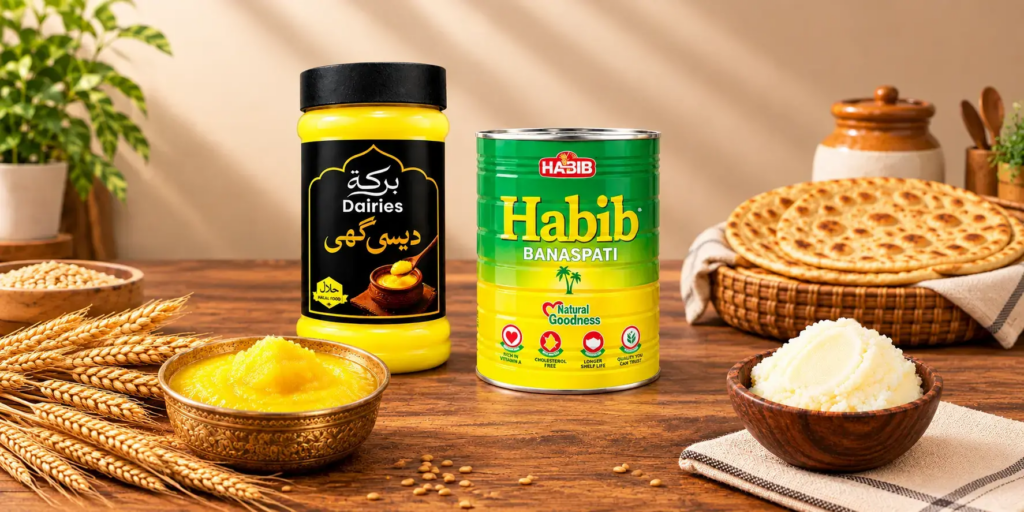
If you have ever stood in a grocery aisle in Pakistan wondering whether to pick up a tin of desi ghee or a pack of banaspati, you are not alone. Both are popular cooking fats in South Asian kitchens, but they are made in completely different ways and affect your health very differently. In this guide, we break down the real differences between desi ghee vs banaspati so you can make an informed choice for your family’s kitchen.
What Is Desi Ghee?
Desi ghee is a form of clarified butter made by slowly simmering pure cow or buffalo milk cream until the water evaporates and the milk solids separate, leaving behind a rich, golden fat. It is completely natural, free from artificial processing, and has been used in South Asian households for generations. Pure desi ghee, like the one made fresh at Barakah Dairies, keeps its traditional aroma, granular texture, and nutty flavour because nothing artificial is added during production.
What Is Banaspati?
Banaspati, sometimes called vanaspati or “dalda,” is a manufactured cooking fat made from vegetable oils such as palm or cottonseed oil. Through a chemical process called hydrogenation, liquid oil is converted into a solid fat that looks and behaves somewhat like real ghee. It was originally introduced as a low-cost substitute for desi ghee and quickly became common in restaurants, bakeries, and budget-conscious kitchens because of its long shelf life and lower price.
Key Differences Between Desi Ghee vs Banaspati
1. Source: Desi ghee comes directly from dairy milk fat, while banaspati is produced from processed vegetable oils that undergo hydrogenation.
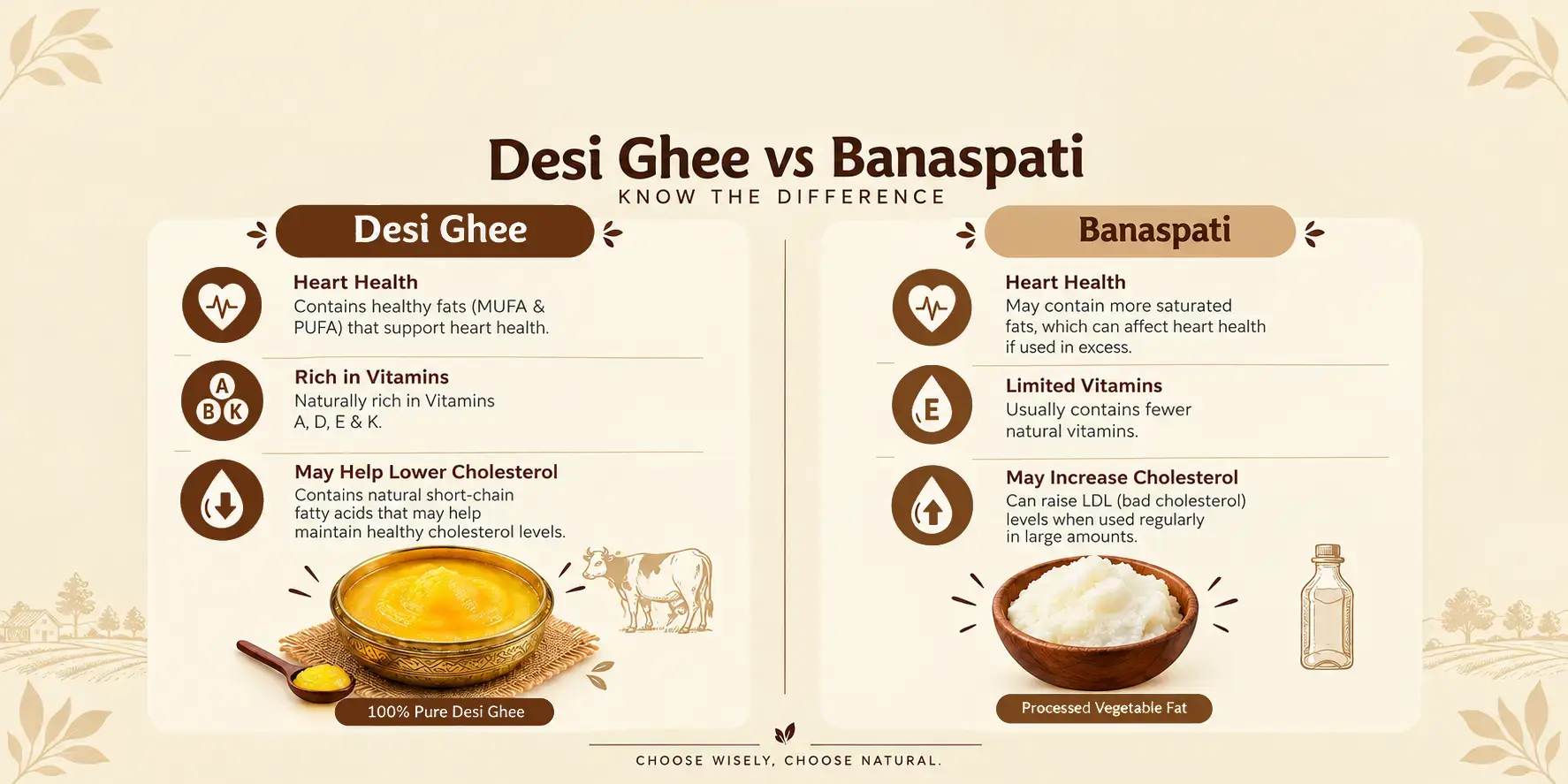
2. Nutrition: Desi ghee naturally contains fat-soluble vitamins A, D, E and K, along with butyric acid, which supports digestion. Banaspati offers little to no natural nutrition and is stripped of these beneficial compounds during processing.
3. Fat Type: Desi ghee mainly contains saturated fat, while banaspati often contains trans fat, a type of fat that health experts widely agree is more harmful to heart health.
4. Taste and Aroma: Desi ghee has a warm, nutty, slightly roasted dairy aroma that enhances roti, paratha, and rice dishes. Banaspati has a flatter, sometimes artificial smell.
5. Price and Shelf Life: Banaspati is cheaper and has a longer shelf life, which is why it is common in commercial cooking. Desi ghee costs more because it requires more milk and a longer preparation process, but it delivers far more nutritional value.
Health Impact: Which One Is Safer for Daily Use?
This is the question most people really want answered. Health researchers generally agree that the trans fats found in banaspati are more damaging to the body than the saturated fats naturally present in desi ghee. Regular consumption of trans fats has been linked to higher bad cholesterol (LDL), lower good cholesterol (HDL), increased risk of heart disease, and weight gain. Desi ghee, when consumed in moderation, does not lower good cholesterol the way banaspati does, and it also supplies the body with usable nutrients rather than empty processed fat.
In short, pure desi ghee in reasonable quantities fits far better into a balanced, health-conscious diet than banaspati.
Quick Comparison Table
Final Verdict: Which One Should You Choose?
If your priority is long-term health, natural nutrition, and authentic taste, desi ghee is the clear winner over banaspati. Banaspati may save you money in the short term, but the potential health cost of regular trans-fat consumption makes it a poor everyday choice for home cooking. Desi ghee, especially when sourced from a trusted dairy, is a small investment in your family’s long-term wellbeing.
At Barakah Dairies, we make pure, traditionally prepared desi ghee with no additives or shortcuts, so you get the same authentic taste and nutrition your grandparents grew up with. Explore our desi ghee range and bring real, wholesome flavour back into your kitchen.